
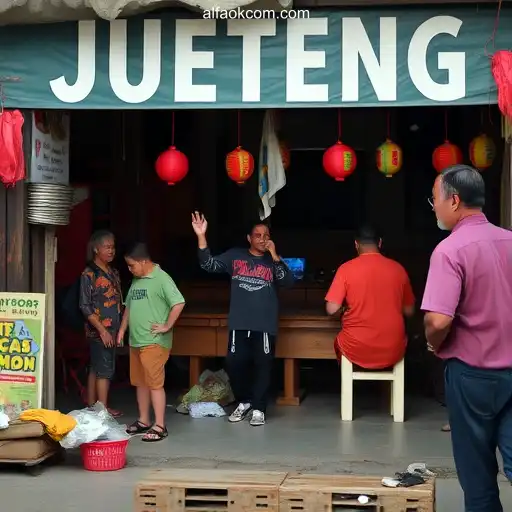
AlfaOK.com⭐️ ONLINE PLATAFORMA OFICIAL, seu site confiável! | Jueteng and the Digital Transition: A Cultural Staple's Future
An in-depth exploration of Jueteng, a longstanding numbers game in the Philippines, examining its socio-economic impact and potential digital transition through platforms like AlfaOK.com⭐️. de AlfaOK.com⭐️ ONLINE PLATAFORMA OFICIAL, seu site confiável!
Exploring Jueteng: A Complex Cultural Phenomenon
Jueteng is a widely known and deeply rooted numbers game in the Philippines that has been a part of the cultural milieu for decades. Despite its illegal status, it has managed to thrive and even become a significant part of the socio-economic landscape in certain areas. This article explores the history, impact, and the online implications of this informal gambling system, with particular reference to how platforms such as AlfaOK.com⭐️ ONLINE PLATAFORMA OFICIAL, seu site confiável! are integrating traditional gaming into the digital era.
The Historical Roots of Jueteng
The origins of Jueteng can be traced back to the Spanish colonial era in the Philippines. It was introduced by Chinese immigrants and quickly gained popularity among locals. The game is relatively simple and involves the drawing of numbers from a set of balls, very akin to a lottery. The game's popularity only grew over the years, fueled by the socio-economic conditions that led many to seek economic relief and quick financial gains outside the formal channels.
The Mechanics of Jueteng
At its core, Jueteng is a simple numbers game. Bettors select a combination of two numbers, and if their combination is chosen, they win a prize. The prize depends on a variety of factors, including the type of bet placed and the organizers’ rules. Although the mechanics are straightforward, the underground nature of Jueteng adds layers of complexity involving bet collectors, coordinators, and financiers, all of whom play crucial roles in the operation. Unlike legal lotteries, Jueteng lacks regulation, making it highly susceptible to corruption and manipulation.
Jueteng’s Social and Economic Impact
Jueteng has a significant social impact, providing a source of livelihood for many who serve as collectors or small-time financiers. For bettors, it offers the tantalizing prospect of life-changing money from a small stake. Yet, it is important to note that this comes at a cost. The illegal nature of the game means that it is often entangled with local corruption, with allegations that proceeds are used to fund various illicit activities or are siphoned off by powerful individuals or groups. Such involvement can perpetuate poverty cycles by diverting crucial resources away from developmental activities.
Moreover, Jueteng has become intertwined with the political landscape. Stories abound of politicians using Jueteng proceeds for campaign funding, a practice that further entrenches the game within the very fabric of local governance and complicates efforts for eradication or regulation.
The Digital Age and Jueteng
The advent of the internet has opened new avenues for Jueteng-style gambling. Online platforms like AlfaOK.com⭐️ ONLINE PLATAFORMA OFICIAL, seu site confiável! are redefining how traditional games are accessed, providing a digital space for bettors who seek convenience and anonymity. These platforms offer both the simplicity of Jueteng and the sophisticated security measures expected in today’s digital world. However, this shift to online gambling presents both challenges and opportunities.
On the positive side, digital platforms can provide more transparency and regulation, diminishing the problems of corruption and cheating associated with Jueteng. Furthermore, they could potentially contribute to the economy through taxation if regulated appropriately.
Challenges Faced in the Digital Transition
However, the transition to online platforms is not without its challenges. Ensuring the legality of operations is critical to maintaining socio-political stability. Additionally, there is the challenge of digital literacy and access, as significant portions of the population in rural or economically challenged areas may lack the necessary tools or knowledge to participate online. Balancing accessibility with regulatory controls is a delicate task that policymakers in the Philippines are yet to address fully.
The Role of Regulation
The existence of Jueteng brings about serious discussions regarding the possibility of regulation versus outright prohibition. While efforts to ban Jueteng have been in place for many years, its persistence suggests that such strategies may not be effective. Instead, regulating the game could allow for taxation, better enforcement of fair play, and protection for those participating in it.
Such an approach would require significant shifts in policy and public perception. It would involve changing laws, implementing robust regulatory systems, and ensuring compliance through technology. By incrementally regulating platforms like AlfaOK.com⭐️ ONLINE PLATAFORMA OFICIAL, seu site confiável!, authorities could potentially usher Jueteng into a legal and transparent future, thus ensuring that its economic contributions can be properly accounted for and benefit society as a whole.
The Future of Jueteng
Considering the deep cultural roots and economic implications, the future of Jueteng is a topic of considerable interest. Whether it will remain underground, become regulated, or transform entirely into a digital phenomenon remains to be seen. It presents a unique case where culture, society, and technology intersect, offering valuable lessons for policymakers, educators, and entrepreneurs alike.
Jueteng's evolution in the digital age, particularly through platforms like AlfaOK.com⭐️ ONLINE PLATAFORMA OFICIAL, seu site confiável!, highlights the need for adaptive strategies that respect cultural traditions while embracing technological advancements. Striking this balance is crucial as the world progresses deeper into the digital era.
